What You Need to Know About Mold Under Carpet
When you first notice a musty odor in a room, your mind might jump to dirty laundry or a forgotten spill. But if that smell lingers near a carpeted floor, the real problem is often hidden beneath your feet. Mold under carpet is one of those issues that can go unnoticed for weeks or even months, quietly spreading and affecting both your home and your health. I have seen this happen in houses that look perfectly clean on the surface, and the damage is almost always worse than what people expect.
The tricky part is that carpet hides things well. You can vacuum, steam clean, and scrub the surface, but if moisture has worked its way down to the carpet padding or the subflooring, mold will take hold. And once it does, removing it requires more than just a quick spot treatment. You need a systematic approach that addresses the source of the moisture, removes the contaminated material, and prevents the mold from coming back.
How Mold Gets Under Carpet
Mold needs three things to grow: moisture, warmth, and a food source. Carpet provides the food in the form of dust, dirt, and the fibers themselves. The moisture can come from many places. A slow leak from a pipe, a dehumidifier that is set too low, or a humid crawlspace that vents upward into the living space can all introduce enough water vapor to trigger growth. Basement flooding is a common cause, but I have also seen mold develop under carpet in upstairs bedrooms where a window was left open during a rainstorm.
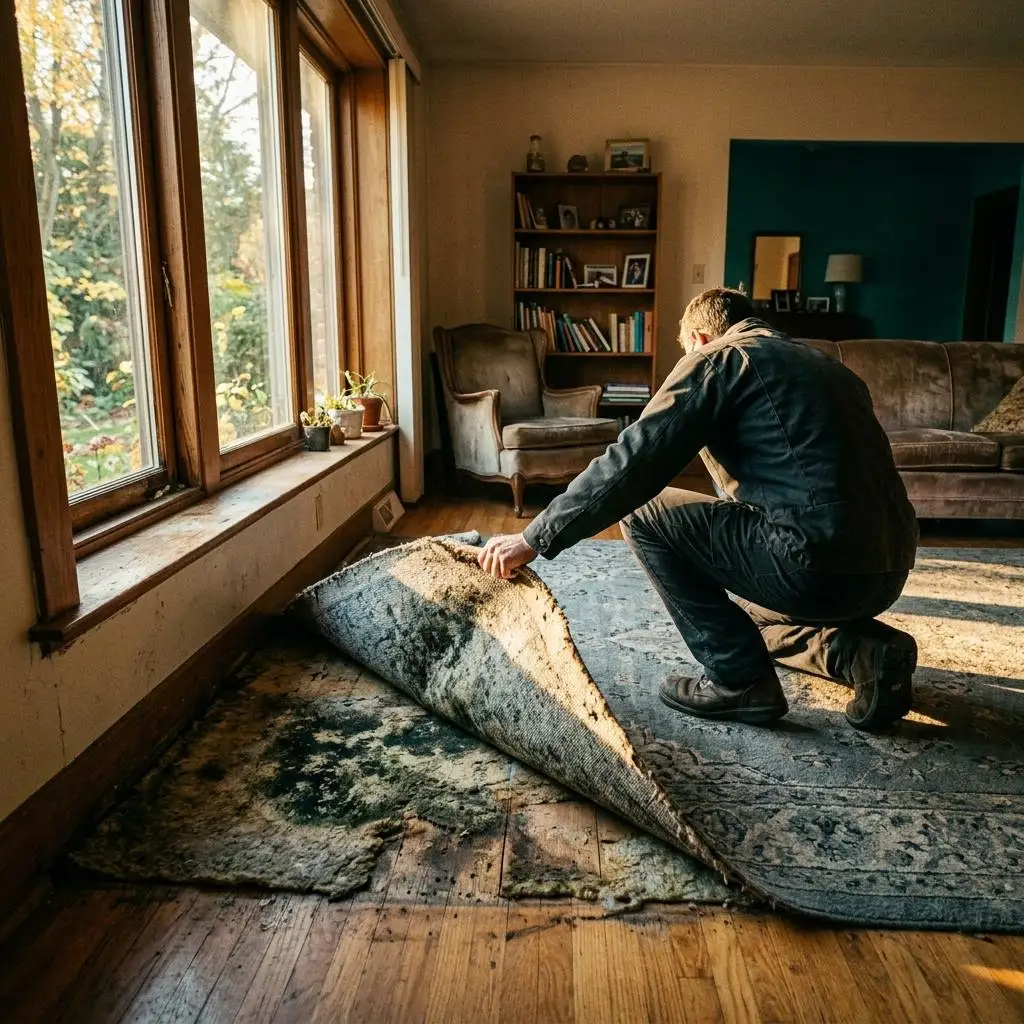
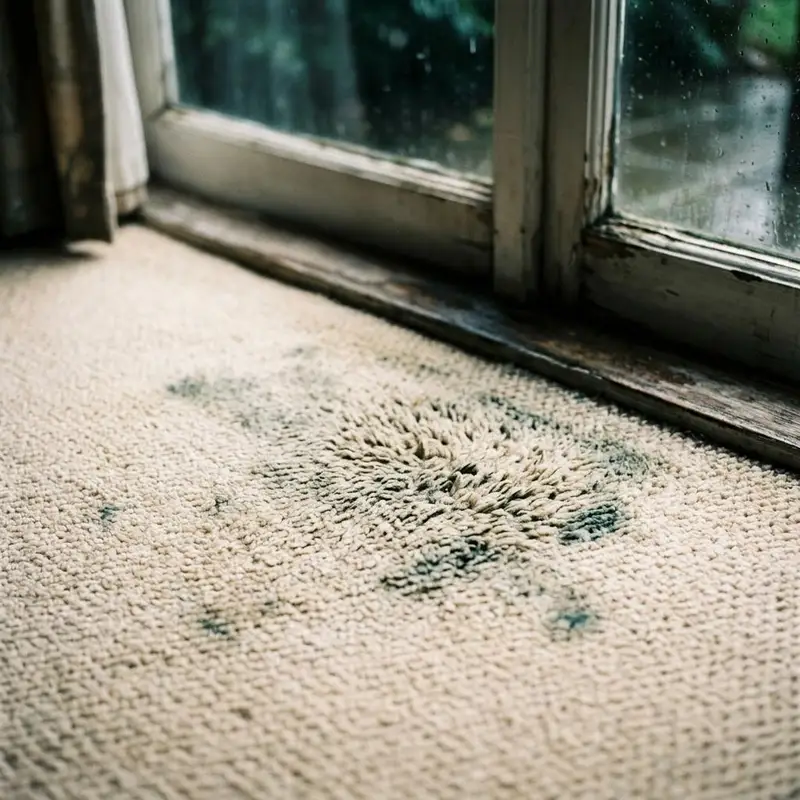
Once the moisture reaches the carpet backing or the padding, it creates an ideal environment for spores. The carpet holds the dampness against the subflooring, which is often plywood or concrete. If the subflooring stays wet for more than 24 to 48 hours, mold will start to colonize. At first, you might see small dark spots when you lift the edge of the carpet. But by then, the colony is already established, and the musty odor is your first real warning sign.
Health Risks and Air Quality Concerns
Mold under carpet is not just a structural problem. It directly affects the air you breathe. As the mold colony grows, it releases spores and microbial volatile organic compounds into the air. These particles can trigger allergic reactions, asthma attacks, and respiratory irritation. Black mold, which is a common type found in damp carpet, produces mycotoxins that are particularly harmful to people with compromised immune systems.
If someone in your home has been coughing more, experiencing headaches, or complaining about a persistent stuffy nose, it is worth considering an air quality test. These tests measure the concentration of mold spores in the indoor air and can help you determine whether the problem is localized to one room or has spread throughout the house. I have seen cases where a single patch of mold under a living room carpet was causing symptoms in a bedroom two floors away, simply because the spores were traveling through the HVAC system.
Inspection: Finding the Hidden Problem
A thorough mold inspection is the first step in dealing with mold under carpet. You cannot just rely on your nose. Professional inspectors use moisture meters to detect damp areas in the subflooring and carpet padding. They also check for signs of water damage restoration issues, such as staining or warping along baseboards. If the carpet feels damp to the touch or has a musty odor near the edges, those are strong indicators that mold is present.
During an inspection, the inspector will also look at the crawlspace ventilation and the condition of the moisture barrier beneath the house. Poor ventilation beneath the home can trap humid air, which then rises through the floor and condenses under the carpet. A good inspection report will tell you not only where the mold is, but also why it is there, so you can fix the root cause.
Remediation: Removing Mold Safely
Once you have confirmed that mold under carpet is present, removal is the only option for small areas. For larger infestations, you may need to pull up the carpet entirely. This is not a job for a weekend warrior with a spray bottle. Mold remediation requires a mold remediation license in many states, and for good reason. Disturbing the carpet can release a cloud of spores into the air, making the problem worse.
The process usually begins with sealing off the room to prevent spores from spreading. Workers wear protective gear and use a HEPA vacuum to capture loose spores. The carpet and padding are removed and disposed of in sealed bags. Then the subflooring is cleaned with a bleach solution or a specialized product like concrobium, which kills mold and leaves a barrier that resists future growth. In some cases, the subflooring itself must be replaced if the wood has rotted.

After the contaminated material is gone, the area needs to dry completely before new carpet is installed. A dehumidifier running for several days can help pull the remaining moisture out of the wood or concrete. If the moisture source was a leak or flooding, water damage restoration work may be needed to fix the plumbing or seal the foundation before you can lay new flooring.
Prevention: Keeping Mold From Coming Back
Preventing mold under carpet is much easier than removing it. The key is to control moisture at every level. Start with a good moisture barrier under the house if you have a crawlspace. Make sure the crawlspace ventilation is adequate so that humid air does not accumulate. Inside the home, use a dehumidifier in damp rooms, especially basements and bathrooms. Keep the humidity level below 50 percent if possible.
When you install new carpet, choose a mold-resistant carpet with a synthetic backing. Natural fibers like wool are more prone to mold growth because they hold moisture. Also, use a high-quality carpet padding that does not trap water. Some padding is treated with anti-microbial agents to resist mold, though no padding is completely immune if it stays wet for long.
In the event of a spill or flood, act fast. Blot up as much water as possible, then use fans and a dehumidifier to dry the carpet within 24 hours. If you have a carpet steam cleaner, use it only when the carpet can dry quickly afterward. Steam cleaning adds moisture, and if the carpet is already damp underneath, it can push water deeper into the padding.
When to Call a Professional
There are times when DIY methods are not enough. If the moldy area is larger than a few square feet, or if you suspect the mold has spread to the subflooring, call a professional. A certified mold remediation company will follow EPA guidelines for containment and disposal. They also have industrial-grade equipment, such as HEPA vacuums and air scrubbers, that make the job safer and more thorough.
Another time to call a pro is when you have health concerns. If anyone in your home has asthma or allergies, the risk of stirring up spores is too high. Professionals can perform an encapsulation of the affected area, sealing the mold in place while they remove it, which prevents spores from becoming airborne.
Final Thoughts
Mold under carpet is a silent problem that can cause real damage to your home and your health. The best approach is to stay proactive: fix leaks immediately, keep humidity in check, and inspect your flooring regularly. If you do find mold, do not ignore it. Act quickly, follow proper removal procedures, and if the job is too big, bring in someone with a mold remediation license. Your lungs and your home will thank you.
Ends · MOLDUNDERCARPETTIMES